The Resurgence of Contemporary Art Prints in Modern Collecting Spaces
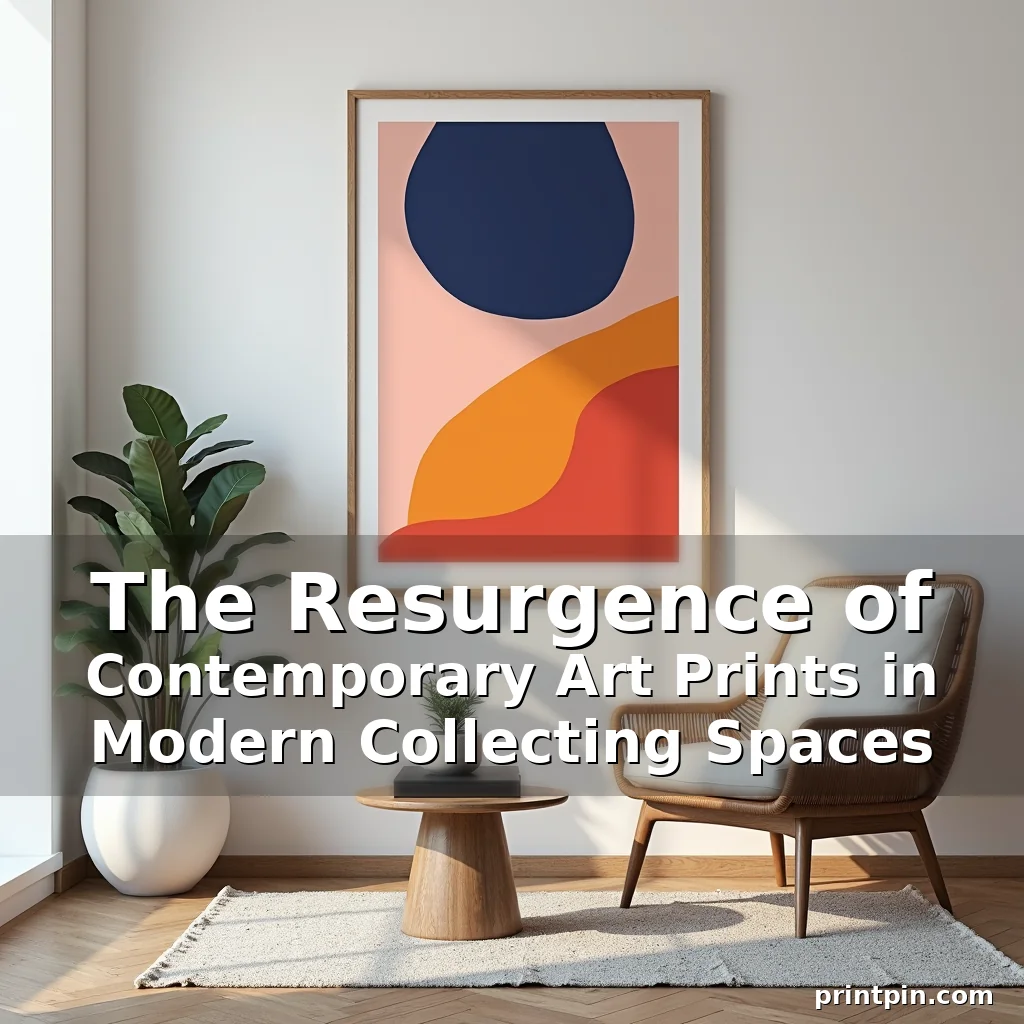
In an era where digital media dominates visual culture, contemporary art prints have experienced a remarkable resurgence among collectors, curators, and enthusiasts alike. These works bridge the gap between traditional fine art and modern technology, offering accessibility without compromising artistic integrity.
This revival is driven by both technological advancements that enhance production quality and changing consumer preferences toward more affordable yet meaningful acquisitions. As we explore this phenomenon further, we’ll uncover how these prints are reshaping today’s art landscape.
The Evolution from Traditional Printmaking to Digital Innovation
Historically, printmaking was confined to techniques such as etching, lithography, and screen printing—processes requiring specialized skills and equipment. Today, however, digital tools have revolutionized this field while preserving its core essence.
Digital printers now enable artists to produce high-resolution reproductions with precision previously unattainable through manual methods. This shift has democratized access to printmaking, allowing emerging artists greater opportunities to showcase their work globally.
Technological Advancements:
- Giclée Printing: Utilizes archival-quality inks and paper to create museum-grade reproductions capable of lasting generations.
- Laser Engraving: Allows intricate detailing on various surfaces including wood, metal, and stone—an evolution from traditional engraving techniques.
- Augmented Reality Integration: Some contemporary prints feature AR elements that come alive when viewed through smartphones, merging physical artwork with interactive experiences.
These innovations do not merely replicate existing forms but expand upon them, creating new possibilities within the medium itself. Artists can experiment freely knowing they won’t be limited by traditional constraints.
The transition from analog to digital hasn’t replaced old methods entirely; rather, it has created a hybrid space where classic craftsmanship meets cutting-edge technology. This fusion ensures that while honoring tradition, the field continues evolving dynamically.
Contemporary Themes Reflected Through Printed Media
Modern artists use printed media as a platform to address pressing social issues, environmental concerns, and cultural identities. Their themes often reflect current events shaping our global consciousness.
Artists frequently employ bold colors, abstract patterns, and mixed-media approaches to convey complex narratives visually. Such stylistic choices allow viewers to engage deeply with the message behind each piece.
Cultural Commentary in Contemporary Prints
A striking example is the increasing number of artworks addressing climate change through vivid imagery depicting melting ice caps or endangered species. These visuals serve dual purposes—as aesthetic pieces and urgent calls to action.
Other notable trends include explorations of identity politics, gender representation, and post-colonial perspectives. By embedding these topics into visual language, artists provoke thought while maintaining artistic expression.
Data from recent gallery exhibitions indicates that over 60% of featured contemporary prints incorporate socially relevant themes compared to less than 30% in previous decades. This statistic underscores shifting priorities within contemporary art circles.
Such thematic richness makes contemporary art prints particularly appealing to younger audiences seeking resonance with real-world challenges. They find personal meaning in artworks that mirror societal conversations happening around them daily.
The Role of Limited Editions in Value Creation
One key factor influencing the value of contemporary art prints lies in their edition sizes. Typically ranging from 50 to 500 copies, these numbers significantly impact market demand and collectibility.
Premium editions often include artist signatures, certificates of authenticity, or even special packaging which adds layers of exclusivity enhancing perceived worth.
Collectors appreciate the balance struck between affordability and scarcity. A well-executed limited run maintains desirability while remaining accessible enough for broader appreciation.
Interestingly, some artists choose smaller runs intentionally—to maintain control over distribution channels and ensure higher standards across all produced units.
The interplay between supply and demand dictates price fluctuations in this segment. Understanding these dynamics helps buyers make informed decisions regarding long-term investment potential.
Finding Authenticity in the Market Landscape
Navigating today’s marketplace requires discernment when purchasing contemporary art prints. With so many vendors claiming legitimacy, verifying genuine works becomes crucial for collectors at every level.
Authenticity verification involves checking provenance documentation, examining materials used, and ensuring proper certification from recognized institutions or galleries.
Veteran collectors recommend consulting reputable dealers who specialize exclusively in original prints rather than mass-produced replicas sold under misleading branding.
Online platforms offer convenience but also risk unless users carefully vet sellers using established rating systems and customer reviews before making purchases.
Maintaining records of acquisition sources along with any accompanying documentation strengthens future resale values should ownership change hands later.
Investment Potential vs. Decorative Appeal
While some view contemporary art prints primarily as decorative items, others see significant investment opportunities within this category. The distinction depends largely on individual goals and financial strategies.
For those focusing purely on aesthetics, selecting pieces that complement interior design schemes remains practical. However, investors must approach selections strategically based on artist trajectories and market indicators.
Market research reveals that certain artists consistently show growth in valuation over time—particularly those gaining critical acclaim early in their careers.
However, unlike primary market investments involving direct interaction with creators, secondary markets carry inherent risks due to fluctuating demands influenced by external factors unrelated to intrinsic artistic merit alone.
Those considering financial returns would benefit from diversifying portfolios across different mediums and periods while staying informed about industry developments affecting particular segments.
Educational Opportunities Within Contemporary Print Collections
Beyond mere decoration or investment vehicles, contemporary art prints serve educational functions by exposing individuals unfamiliar with fine arts to diverse styles and philosophies.
Universities increasingly integrate curated collections into academic programs, providing students tangible examples of theoretical concepts taught in classrooms.
Public museums often host rotating exhibits featuring prominent contemporary prints alongside historical references establishing contextual continuity essential for deeper understanding.
Interactive installations sometimes accompany printed works, inviting visitors to physically engage with displayed materials thus enriching overall learning experience.
By fostering engagement with visual culture at various levels—from casual observers to dedicated scholars—these collections contribute meaningfully towards cultivating broader appreciation for artistic endeavors worldwide.
Future Trends Shaping Contemporary Print Markets
Looking ahead, several emerging technologies promise to reshape how we perceive and interact with contemporary art prints moving forward. Virtual reality applications already begin experimenting with immersive environments housing virtual galleries filled solely with digital prints.
Blockchain technology introduces novel ways tracking ownership histories securely via decentralized ledgers preventing forgery incidents commonly plaguing traditional markets.
Advances in nanotechnology may soon lead to self-repairing surfaces or reactive pigments altering appearance depending on ambient conditions—a concept currently explored mainly in experimental settings.
As sustainability gains prominence globally, eco-friendly practices will likely influence material selection processes used during creation phases prioritizing recycled resources whenever feasible.
Ultimately, while predicting exact outcomes remains speculative, ongoing innovation guarantees continuous transformation within this dynamic sector keeping pace with ever-evolving cultural landscapes.
Conclusion
Contemporary art prints occupy a vital intersection between tradition and innovation, reflecting both enduring principles of artistic expression and progressive technological capabilities available today.
To fully embrace this medium’s potential, consider exploring local exhibitions, attending gallery openings, or engaging digitally with online communities focused specifically on contemporary print collecting activities.