Solid-Fuel Rocket Engines: Compact, Efficient, and Reliable Options for Space Exploration and Military Applications.
The Benefits of Solid-Fuel Rocket Engines
Solid-fuel rocket engines have several key benefits that make them an attractive option for the U.S. military and space agencies. Some of the most significant advantages include:
Drone Wars: U.S. Outgunned by Numbers, Outmanned by Technology
The U.S. has a significant advantage in terms of drone technology, but the sheer number of drones in the conflict zone is overwhelming.
The Drone Problem
The proliferation of drones in the conflict zone has created a significant challenge for the U.S. military. With the ability to produce and deploy drones at an unprecedented scale, the enemy has gained a significant advantage in terms of numbers. The enemy has a significant advantage in terms of numbers, with estimates suggesting that there are over 1,000 drones in the conflict zone. The U.S. military has struggled to keep up with the pace of drone production and deployment, leading to a significant shortage of drones. The enemy has also developed tactics to evade detection and counter U.S. drone strikes, further exacerbating the problem.
The U.S. Advantage
Despite the challenges posed by the drone problem, the U.S. still has a significant advantage in terms of drone technology.
This flexibility would allow for the development of more efficient and cost-effective missile systems.
The Potential of 3D Printing in Missile Production
Advantages of 3D Printing in Missile Production
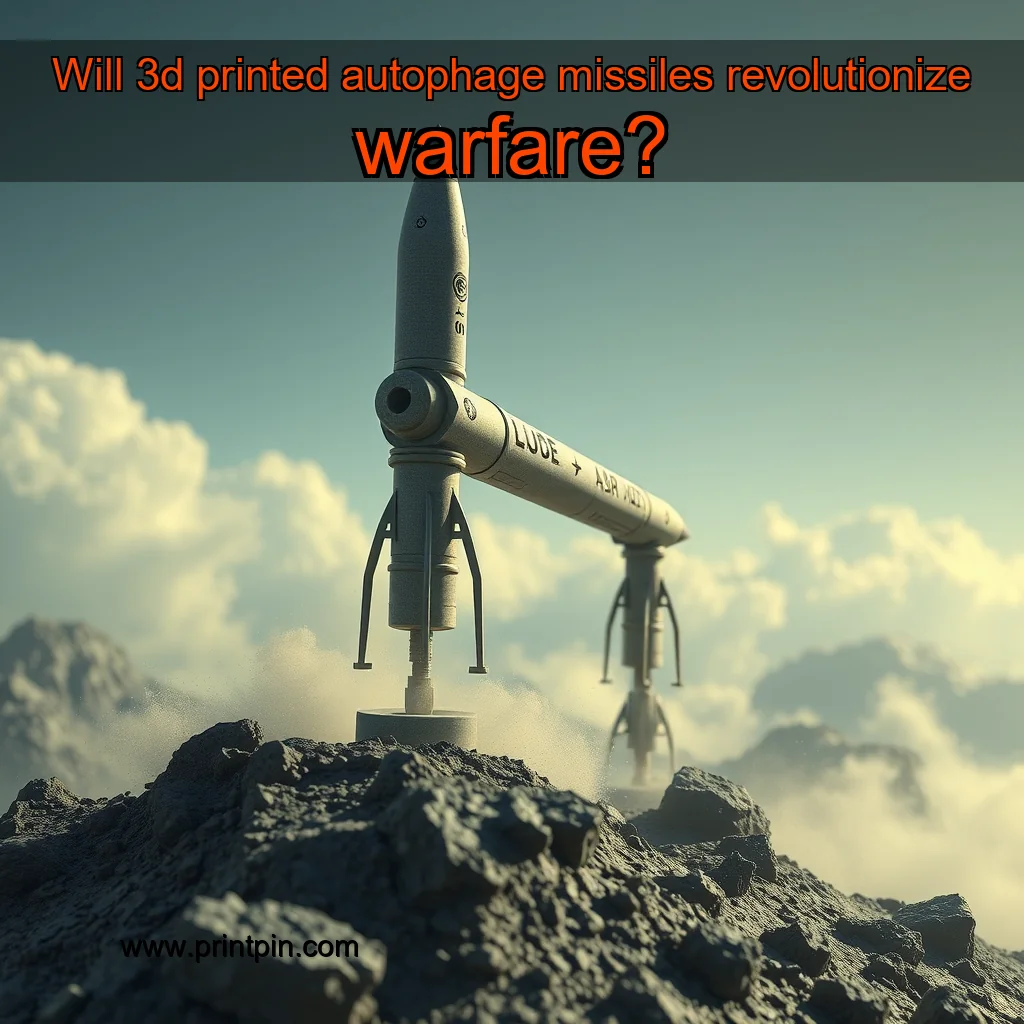
3D printing, also known as additive manufacturing, has the potential to revolutionize the production of missiles. This technology allows for the creation of complex structures and components with unprecedented precision and flexibility. Here are some of the key advantages of 3D printing in missile production:
Improved structural integrity. Enhanced aerodynamics. Increased payload capacity. Reduced radar cross-section. Improved thermal management. Increased range and endurance. Enhanced survivability. Reduced maintenance costs.
Here are some of the key benefits:
Advantages of the New Technology
The Impact on Missile Design
The benefits of the new technology extend far beyond the servo valve itself. The level of innovation and advancement heralds a revolution in missile design, enabling unprecedented performance, efficiency, and adaptability. New Design Paradigms: The new technology enables the development of new design paradigms, such as the use of advanced materials and structures. Increased Use of Automation: The advanced servo valve enables the use of automation in missile design, reducing the need for manual intervention and increasing efficiency.
The plastic would be molded into the desired shape and then attached to the rocket’s core. The core would be made of a lightweight metal alloy, such as aluminum or titanium, which would provide the necessary strength and durability for the rocket’s flight. The plastic would be used for the majority of the rocket’s structure, with the exception of the nose cone and the fins, which would be made of a more rigid material, such as carbon fiber or fiberglass.
The Revolutionary Plastic Rocket
A New Era in Space Exploration
The concept of a plastic rocket has been gaining attention in recent years, and for good reason. With the increasing need for sustainable and environmentally friendly solutions in space exploration, a plastic rocket could be a game-changer. In this article, we will delve into the details of this innovative design and explore its potential benefits.
The Benefits of a Plastic Rocket
The Design and Construction of a Plastic Rocket
The entire rocket would be made from plastic.