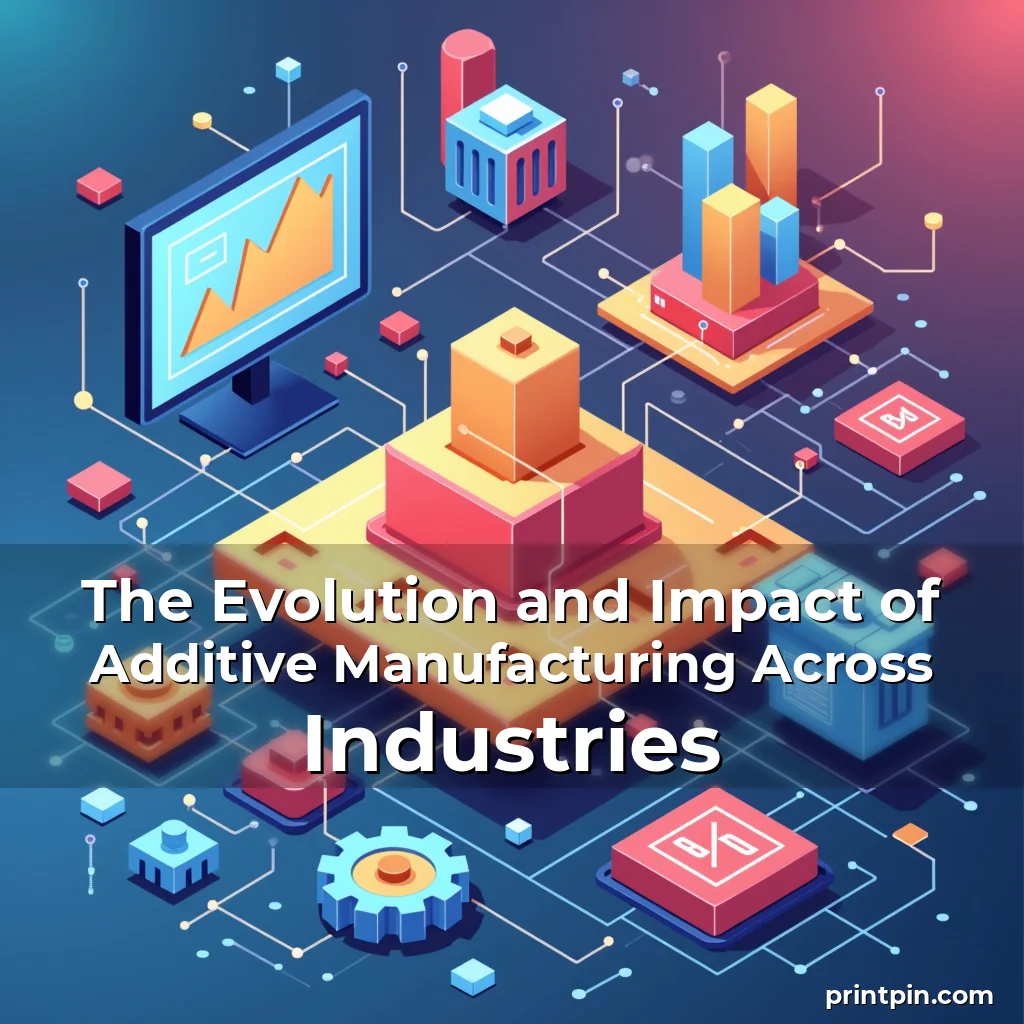
The Evolution and Impact of Additive Manufacturing Across Industries
Additive manufacturing has revolutionized production methods by enabling the creation of complex parts layer by layer from digital models. This transformative approach is reshaping industries ranging from aerospace to healthcare through its unparalleled design flexibility and material efficiency.
Rapid advancements in printer technology, materials science, and software have positioned additive manufacturing as a cornerstone of modern innovation. Its ability to produce customized components with minimal waste makes it an attractive solution across diverse sectors.
Fundamental Principles of Additive Manufacturing
At its core, additive manufacturing involves building objects by sequentially depositing material layers based on a three-dimensional model. Unlike traditional subtractive techniques that remove excess material, this method adds precisely what’s needed.
This process begins with creating a CAD file that defines the object’s geometry. Slicing software then converts these designs into thin cross-sectional layers ready for fabrication.
The actual printing phase uses various technologies including fused deposition modeling, selective laser sintering, and stereolithography. Each technique employs different mechanisms to solidify the deposited material.
Post-processing steps often follow to refine surfaces, enhance structural integrity, or meet industry-specific requirements such as sterilization in medical applications.
Diverse Technologies Driving Additive Manufacturing Innovation
The field encompasses numerous methodologies each tailored to specific use cases and materials. Fused Deposition Modeling (FDM) remains popular due to its simplicity and cost-effectiveness for prototyping.
Selective Laser Melting (SLM) excels at producing high-strength metal parts used in aerospace engineering where precision and durability are critical factors. It utilizes lasers to fuse powdered metals into fully dense structures.
Stereolithography (SLA), which employs UV light to cure liquid resins, offers exceptional surface finish quality ideal for dental prosthetics and intricate jewelry pieces.
- FDM: Ideal for rapid prototyping using thermoplastics like PLA or ABS
- SLM: Suited for high-performance metallic components requiring superior mechanical properties
- SLA: Preferred when fine details and smooth finishes are essential
Materials Revolutionizing Additive Manufacturing Capabilities
Advancements in material science have expanded the range of substances compatible with additive processes. Traditional plastics now coexist with advanced composites, ceramics, and even bioengineered tissues.
Polymers remain foundational in many applications but newer developments include carbon fiber reinforced polymers offering enhanced strength-to-weight ratios crucial for automotive components.
Metal alloys play a vital role particularly in industrial settings demanding robustness under extreme conditions. Titanium and nickel-based superalloys are frequently utilized in jet engine parts.
Ceramic materials enable the production of heat-resistant components suitable for electronics cooling systems or biomedical implants requiring biocompatibility.
Bioinks represent cutting-edge innovations allowing scientists to fabricate living tissue constructs for regenerative medicine purposes.
Industrial Applications Transforming Modern Production
Aerospace manufacturers leverage additive manufacturing to create lightweight yet durable components reducing overall aircraft weight and fuel consumption significantly.
In the automotive sector, companies utilize 3D printing to develop custom parts rapidly while minimizing tooling costs associated with conventional mass production techniques.
Medical device producers benefit greatly from personalized implant solutions made possible through patient-specific scans combined with precise additive fabrication capabilities.
Architectural firms experiment with large-scale printers capable of constructing entire buildings using concrete mixtures optimized for structural performance and sustainability goals.
Economic Implications and Market Growth Trends
The global market for additive manufacturing services experienced exponential growth reaching over $18 billion annually according to recent estimates. Projections indicate continued expansion driven by technological improvements and increasing adoption rates.
Small businesses find value in distributed manufacturing models enabled by affordable desktop printers that allow local production without reliance on distant factories.
Mass customization becomes economically viable thanks to reduced setup times compared to traditional machining processes making niche products profitable at scale.
Industry analysts predict that by 2030, nearly half of all manufactured goods could involve some form of additive processing reflecting widespread integration into mainstream operations.
Sustainability Advantages Redefining Industrial Practices
Additive manufacturing inherently reduces material waste since only necessary quantities are consumed during part fabrication unlike traditional methods involving significant scrap generation.
The energy footprint associated with additive processes tends to be lower than conventional manufacturing techniques especially considering localized production minimizes transportation-related emissions.
Recycling initiatives within the industry aim to recover unused powders and filaments promoting circular economy principles aligned with environmental conservation objectives.
Biodegradable materials further contribute to sustainability efforts providing eco-friendly alternatives suitable for consumer product manufacturing scenarios.
Challenges Hindering Widespread Adoption
Despite numerous benefits, challenges persist regarding standardization of quality assurance protocols required for mission-critical applications such as aerospace or medical devices.
Variability in printed component reliability necessitates rigorous testing procedures ensuring consistent dimensional accuracy and mechanical strength across batches.
Limited availability of certified operators trained specifically in operating sophisticated additive equipment poses another barrier to full implementation in professional environments.
Intellectual property concerns arise concerning digital blueprints stored digitally potentially leading to unauthorized replication issues similar to those faced by traditional manufacturing sectors.
Future Innovations Shaping Tomorrow’s Manufacturing Landscape
Ongoing research focuses on improving multi-material printing capabilities allowing simultaneous deposition of dissimilar substances enhancing functional complexity within single fabricated items.
Development of self-repairing materials integrated into printable substrates promises longer-lasting components automatically detecting and repairing minor damages autonomously.
Integration with artificial intelligence enables real-time monitoring and adjustment optimizing print parameters dynamically based on evolving conditions during fabrication cycles.
Emerging hybrid systems combining additive and subtractive techniques offer greater versatility addressing limitations inherent in standalone approaches through complementary advantages.
Conclusion
Additive manufacturing continues to evolve rapidly redefining how we conceptualize and execute physical creation processes across multiple domains.
As technological barriers diminish and economic incentives align favorably, broader acceptance of these innovative practices seems inevitable shaping future industrial paradigms globally.