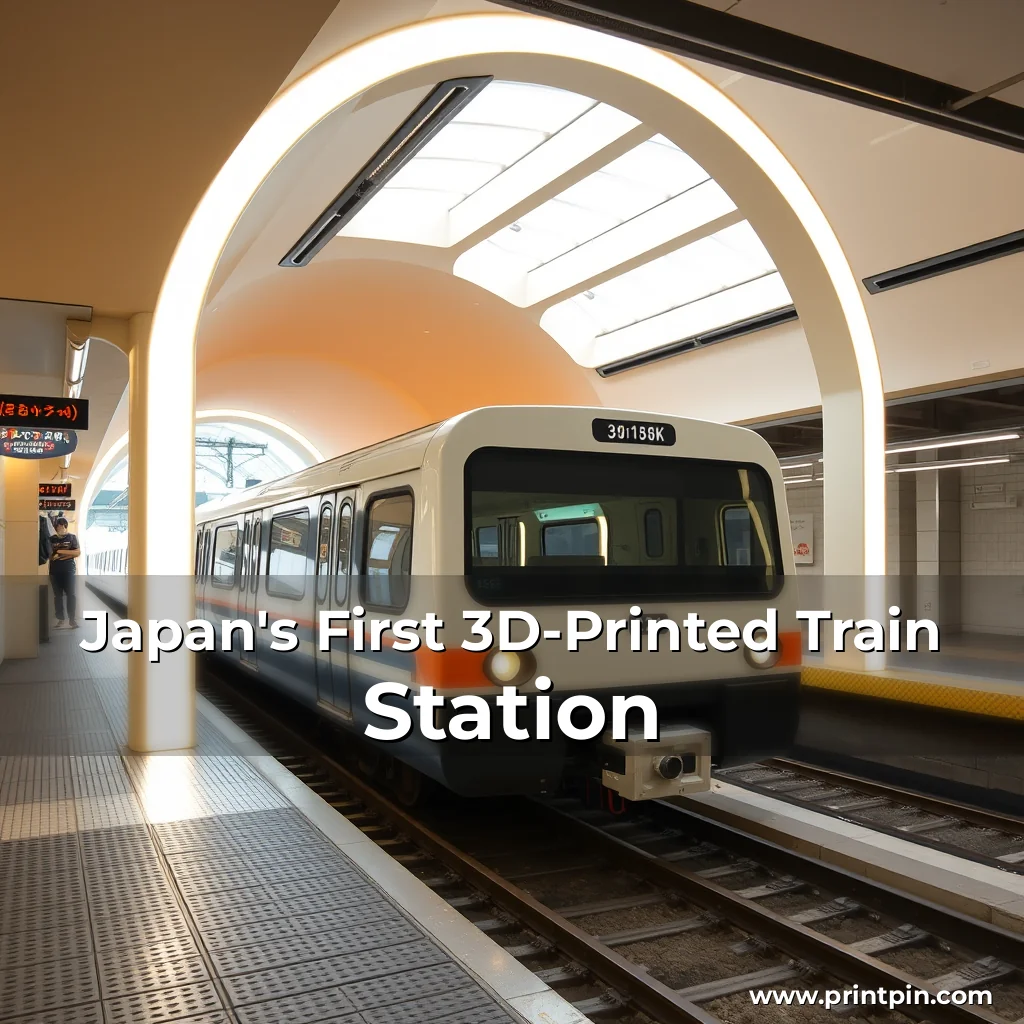
Japan has made significant strides in embracing cutting-edge technology, and now, it is home to what is believed to be the world’s first train station built entirely with 3D printing technology. The Hatsushima Station, situated in Arida City, just south of Osaka, is the culmination of a collaborative effort between the West Japan Railway Company (JR West), JR West Innovations, and the pioneering 3D printing construction trailblazer Serendix. Benefits of 3D Printing in Construction
• Reduced labor shortages
• Faster construction time
• Improved durability and resistance to corrosion
• Reduced material waste
• Increased design freedom
The Hatsushima Station’s structure was assembled in March 2025, but it has not yet officially opened. JR West plans to complete the interior work, including ticket machines and card readers, before welcoming passengers in July. When it opens, the station will replace the original wooden building from 1948 and serve as a model for modern, efficient infrastructure in rural areas. The Challenges of Traditional Construction
Traditional construction methods often result in labor shortages, particularly when rebuilding old wooden stations. Rebuilding with traditional methods can take a considerable amount of time and people, which can be a significant challenge. The Hatsushima Station’s Unique Features
• A single-story structure covering approximately ten square meters (about 107 square feet)
• Wall decorations featuring artistic motifs inspired by local culture, including mandarin oranges and cutlassfish
• A quick construction process, with the 3D printed components manufactured off-site and assembled during the night, reducing disruption to train services
The Role of Serendix in 3D Printing Construction
Serendix, headquartered in Nishinomiya City, has been a pioneer in 3D printed housing in Japan. The company gained attention in 2022 when it completed “serendix10,” a 10-square-meter 3D printed house that was constructed in just 23 hours. Building on this success, Serendix introduced “serendix50,” a 50-square-meter home designed for two people, which can be built in under 45 hours and costs about ¥5.5 million ($38,500). Advancements in 3D Printing Technology
In 2024, Serendix expanded its capabilities by acquiring three new construction 3D printers, bringing its total to eight machines, with plans to increase to twelve by the end of 2025. These printers are installed across various locations in Japan, including Kumamoto, Chiba, and Okinawa, as part of Serendix’s affiliate output factory strategy. The Future of 3D Printing in Construction
The introduction of 3D printing technology in construction is expected to have a significant impact on the industry. With the ability to rapidly construct structures, reduce labor shortages, and minimize material waste, 3D printing is poised to revolutionize the way buildings are constructed.
| Benefits of 3D Printing | Example |
|---|---|
| Faster construction time | The Hatsushima Station’s 3D printed components were manufactured off-site and assembled during the night, reducing disruption to train services. |
| Improved durability and resistance to corrosion | The new concrete structure offers better durability and resistance to corrosion than the old wooden building. |
| Reduced material waste | The 3D printing process doesn’t require formwork, which means less material waste and more freedom in design. |
“We’re thrilled to have played a part in the development of this innovative project, which will serve as a model for modern, efficient infrastructure in rural areas,”
said a representative from JR West Innovations. “This technology has the potential to transform the way we build and maintain our infrastructure, and we’re excited to see the impact it will have in the years to come.”
Key Takeaways
• Japan is now home to what is believed to be the world’s first train station built entirely with 3D printing technology. • The Hatsushima Station will replace the original wooden building from 1948 and serve as a model for modern, efficient infrastructure in rural areas. • 3D printing technology has the potential to revolutionize the construction industry, reducing labor shortages, improving durability, and minimizing material waste. As we move forward, it will be exciting to see how this technology continues to evolve and improve, and how it will shape the future of construction in Japan and beyond.