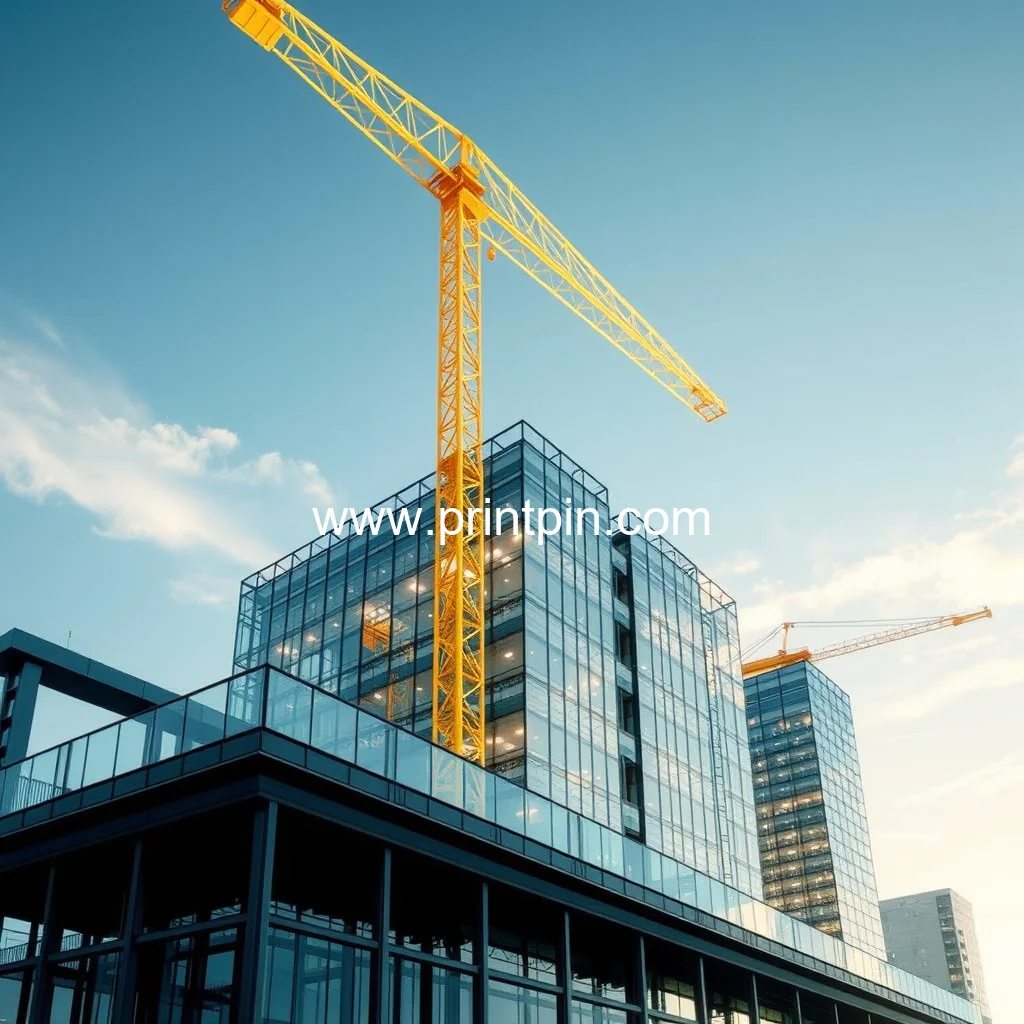
Here’s a closer look at the market’s growth and its potential impact on the construction industry.
The Rise of Additive Manufacturing in Construction
Additive manufacturing, also known as 3D printing, has been gaining traction in the construction industry over the past decade. The technology allows for the creation of complex structures and components with unprecedented precision and speed. This has led to a significant reduction in material waste, as well as the ability to create customized designs and components that would be difficult or impossible to produce using traditional manufacturing methods.
Key Benefits of Additive Manufacturing in Construction
Furthermore, the increasing adoption of Building Information Modelling (BIM) is facilitating collaboration and data exchange among stakeholders.
The Rise of Additive Manufacturing in Construction
Additive manufacturing, also known as 3D printing, is revolutionizing the construction industry by providing a sustainable and efficient way to build structures. The market is expected to grow significantly in the coming years, driven by the increasing demand for eco-friendly construction methods.
Sustainability and Eco-Friendliness
Sustainability is a critical factor driving the demand for additive manufacturing in construction. The traditional construction process is often associated with waste, pollution, and environmental degradation. In contrast, additive manufacturing allows for the creation of structures with minimal waste and zero emissions. This is achieved through the use of recycled materials, locally sourced components, and optimized design processes. Key benefits of sustainable additive manufacturing in construction: + Reduced waste and pollution + Zero emissions + Use of recycled materials + Optimized design processes
Artificial Intelligence and Enhanced Design Capabilities
The integration of Artificial Intelligence (AI) into additive manufacturing is enabling enhanced design capabilities and predictive analytics.
The Rise of Customization in Additive Manufacturing
Additive manufacturing, also known as 3D printing, has been gaining momentum in recent years. The technology has evolved significantly, enabling the creation of complex geometries and customized products that cater to specific client needs. One of the key drivers of this trend is the growing demand for product customization.
Key Benefits of Customization
Customization offers several benefits for clients, including:
The Role of Additive Manufacturing
Additive manufacturing is uniquely positioned to deliver customized products.
The market is expected to experience significant growth in the coming years, driven by increasing demand for sustainable and energy-efficient building materials.
The Rise of Additive Manufacturing in Construction
Additive manufacturing, also known as 3D printing, has been gaining traction in the construction industry in recent years. This technology allows for the creation of complex structures and components with unprecedented precision and speed. The use of additive manufacturing in construction has several benefits, including reduced material waste, increased design flexibility, and improved sustainability.
Key Players in the Market
Several key players are driving innovation and shaping the market trends in the additive manufacturing in construction market. Some of the notable players include:
Market Trends and Drivers
The additive manufacturing in construction market is expected to experience significant growth in the coming years, driven by increasing demand for sustainable and energy-efficient building materials.
Introduction
The world of construction is undergoing a significant transformation, driven by the need for sustainable and environmentally friendly practices. One innovative approach that is gaining traction is the use of 3D printing technology in building homes. This method has the potential to revolutionize the way we construct buildings, reducing waste, energy consumption, and environmental impact.
Benefits of 3D Printed Homes
Building Materials
The choice of building materials is a critical component of the 3D printing process. Traditional building materials, such as concrete and steel, are often used in 3D printing due to their strength, durability, and availability. However, these materials can have a significant environmental impact, contributing to greenhouse gas emissions and resource depletion.
Sustainable Materials
The Rise of 3D Printing in the Construction Industry
The construction industry is on the cusp of a revolution, driven by the increasing adoption of 3D printing technologies. Companies like the one in question are at the forefront of this movement, leveraging 3D printing to enhance their product offerings and sustainability initiatives.
Benefits of 3D Printing in Construction
Investment in 3D Printing Technologies
The company is investing in 3D printing technologies to stay ahead of the curve and capitalize on the growing demand for 3D printed products. This investment will enable the company to:
The company is working with various stakeholders, including government agencies, universities, and private companies, to develop and implement these technologies.
The Rise of Concrete 3D Printing in Construction
The construction industry is on the cusp of a revolution, driven by the emergence of concrete 3D printing technologies. This innovative approach to building construction has the potential to transform the way we design, build, and maintain structures. In this article, we will delve into the world of concrete 3D printing, exploring its applications, benefits, and the companies leading the charge.
The Science Behind Concrete 3D Printing
Concrete 3D printing involves the use of a specialized printer to deposit layers of concrete, creating complex structures with unprecedented precision and speed. The process begins with the creation of a digital model of the structure, which is then translated into a set of instructions for the printer. The printer uses a combination of cement, water, and aggregate to create the desired shape, layer by layer. Key components of concrete 3D printing: + Digital modeling software + 3D printer + Cement, water, and aggregate + Control system The printer’s control system ensures that each layer is perfectly aligned and level, creating a strong and stable structure.
Market Overview
The additive manufacturing in construction market is a rapidly growing industry, driven by technological advancements and shifting consumer demands. The market’s growth is expected to be fueled by the increasing adoption of 3D printing technology in the construction sector. This technology enables the rapid creation of complex structures and customized designs, making it an attractive option for builders and architects.
Key Drivers
Regional Opportunities
The additive manufacturing in construction market presents numerous opportunities for growth and expansion, particularly in untapped regions.
The Challenges Facing the Construction Industry
The construction industry is facing a multitude of challenges that threaten its very existence. Regulatory constraints, operational inefficiencies, and a shortage of skilled labor are just a few of the hurdles that need to be addressed. In this article, we will delve into the challenges facing the construction industry and explore potential solutions.
Regulatory Constraints
Regulatory constraints are a significant challenge for the construction industry. Governments around the world are implementing new regulations and laws that are designed to improve safety, reduce waste, and increase sustainability. While these regulations are well-intentioned, they can also be costly and time-consuming for construction companies to comply with. Some of the regulatory constraints that are affecting the construction industry include: + Stricter building codes and zoning regulations + Increased environmental regulations + Greater emphasis on safety and risk management + More stringent labor laws and regulations
Operational Inefficiencies
Operational inefficiencies are another major challenge facing the construction industry.
Smarter Building Designs, Smarter Construction Processes.
The Rise of Additive Manufacturing in Construction
Additive Manufacturing (AM) has been gaining momentum in the construction industry, transforming the way buildings are designed, constructed, and maintained.
Market Overview
The Additive Manufacturing in Construction Market is a rapidly growing industry, driven by increasing demand for sustainable and innovative building solutions. The market is expected to reach $1.4 billion by 2025, growing at a CAGR of 21.1% from 2020 to 2025.
Key Drivers
Market Trends
The Additive Manufacturing in Construction Market is characterized by several trends that are driving its growth. Some of the key trends include:
Introduction
The German DIY (Do-It-Yourself) market has experienced significant growth in recent years, driven by increasing consumer demand for home improvement and renovation projects. This growth has led to the emergence of new players in the market, as well as the expansion of existing retailers. In this article, we will delve into the world of German DIY retailers, exploring trends, industry insights, and best practices that can help businesses navigate this dynamic market.
Market Trends
The German DIY market is characterized by several key trends, including:
These trends have significant implications for German DIY retailers, who must adapt to changing consumer preferences and behaviors.
Industry Insights
The German DIY market is highly competitive, with numerous players vying for market share.
Our team of experts is dedicated to delivering high-quality solutions that meet the unique needs of each client.
About STATS N DATA
Our Mission
At STATS N DATA, we believe that data is the lifeblood of any successful organization. It’s the foundation upon which informed decisions are made, and the catalyst for growth and innovation. Our mission is to harness the power of data to unlock new opportunities, drive business success, and create lasting value for our clients.
Our Approach
We take a collaborative and customer-centric approach to data analysis and reporting. Our team of experts works closely with clients to understand their unique needs and goals, and develops tailored solutions that meet those needs. We’re not just data analysts – we’re strategic partners who help clients make sense of their data, identify emerging trends, and capitalize on new opportunities.
Our Services
We offer a range of services designed to help clients unlock the full potential of their data. These include:
Our Expertise
Our team of experts has extensive experience in a wide range of industries, including finance, healthcare, retail, and more.