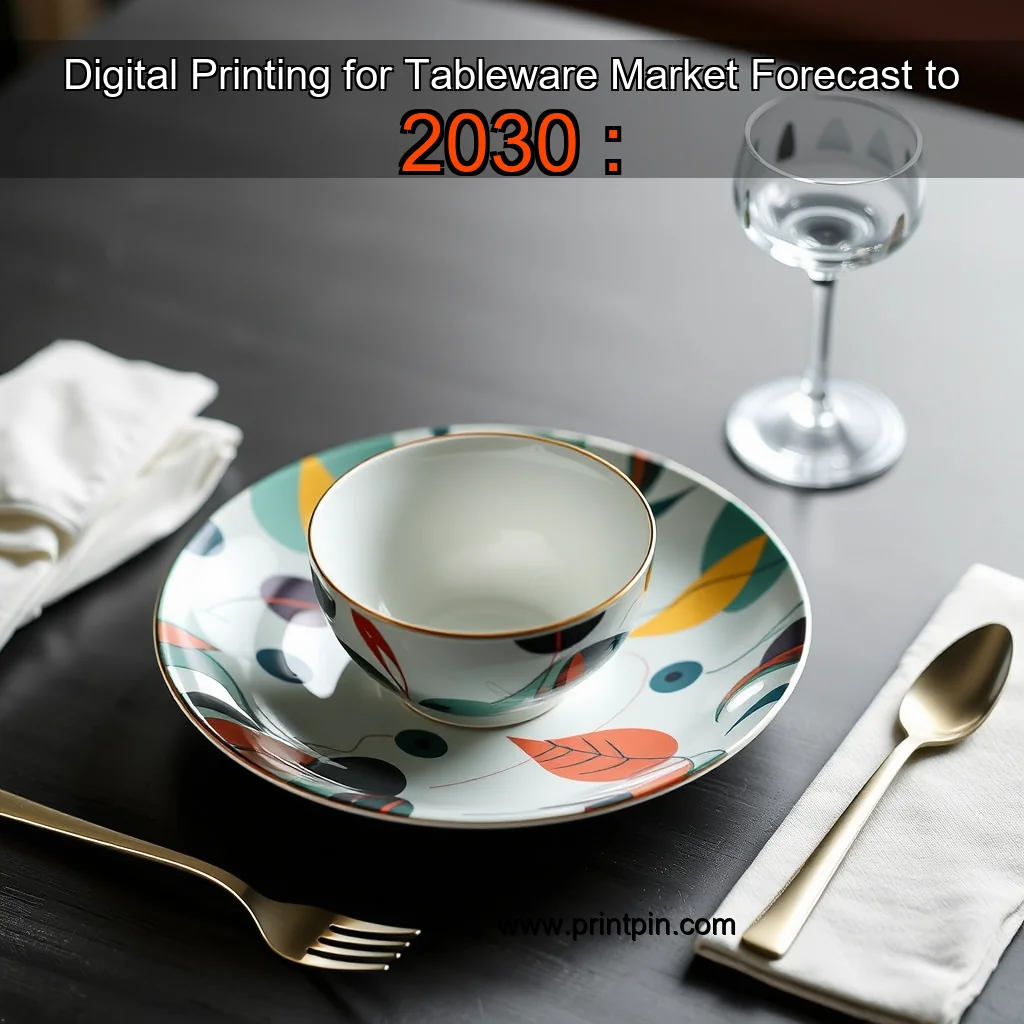
The Rise of Digital Printing for Tableware
The digital printing for tableware market has experienced significant growth in recent years, driven by the increasing demand for personalized products. This trend is expected to continue, with the market projected to reach USD 546.87 million by 2030, growing at a CAGR of 6.50% from 2023 to 2030.
Key Drivers of Market Growth
Several factors contribute to the growth of the digital printing for tableware market. Some of the key drivers include:
Market Segmentation
The digital printing for tableware market can be segmented into several categories, including:
Market Opportunities
The digital printing for tableware market presents several opportunities for growth and expansion. Some of the key opportunities include:
The Future of Ink and Materials in Business
As the world shifts towards a more sustainable and environmentally conscious future, businesses are being forced to rethink their approach to ink and materials. The traditional methods of using non-eco-friendly and non-biodegradable inks and materials are no longer viable, and companies must adapt to meet the growing demand for sustainable products.
The Importance of Eco-Friendly Inks and Materials
Eco-friendly inks and materials are not only better for the environment, but they also offer numerous benefits for businesses. Some of the key advantages include:
By incorporating eco-friendly inks and materials into their operations, businesses can significantly reduce their environmental footprint and contribute to a more sustainable future.
Improving Efficiency and Reducing Costs
In addition to using eco-friendly inks and materials, businesses should also focus on developing systems that improve efficiency and reduce costs. This can include:
By improving efficiency and reducing costs, businesses can increase their competitiveness and remain viable in a rapidly changing market.
The Role of Innovation in Sustainability
Innovation plays a critical role in driving sustainability in the ink and materials industry.
The Great Depression’s Lasting Impact on the World Economy and Society.
The Lasting Legacy of the Great Depression
The Great Depression, which lasted from 1929 to the late 1930s, was a global economic downturn that had a profound impact on the world economy. The effects of the Great Depression are still felt today, with many people struggling to make ends meet and find stable employment.
The Causes of the Great Depression
The Great Depression was caused by a combination of factors, including:
The Effects of the Great Depression
The effects of the Great Depression were far-reaching and devastating. Some of the key effects include:
Market Tracking: The report provides a comprehensive analysis of market trends and developments. Market Entry Strategies: The report offers insights into effective entry strategies for new entrants. Market Expansion Strategies: The report provides guidance on how to expand existing businesses into new markets.
Market Overview
The market report provides a comprehensive overview of the market, covering several key areas. This section delves into the market penetration, examining the current market landscape and identifying trends, opportunities, and challenges.
Market Penetration
Market penetration refers to the extent to which a product or service is accepted and used by the target market. The report provides a detailed analysis of the current market landscape, including:
Market Development
The report identifies significant growth opportunities in emerging markets. This section explores the potential for market expansion into new regions, including:
Market Tracking
The report provides a comprehensive analysis of market trends and developments.
The goal is to provide an in-depth analysis of the global ceramic tile market. The global ceramic tile market has experienced significant growth in recent years, driven by increasing demand from the construction industry. The market share of the top players in the industry is an essential aspect to consider when analyzing the market’s dynamics. The top players in the industry, such as Lamosa Cerámica, Mohawk Industries, and Crossville Inc., have managed to maintain a strong market share due to their diversified product portfolios and effective business strategies. One of the key factors contributing to the market share of the top players is their ability to innovate and adapt to changing market trends. Lamosa Cerámica, for instance, has been at the forefront of innovation in the industry, with its latest product launch, a high-performance ceramic tile with improved durability and aesthetic appeal. This strategic move has enabled the company to capture a significant market share, especially in the high-end residential segment. In addition to their product offerings, the top players in the industry have also been focusing on expanding their business strategies to cater to the growing demand from emerging markets. Mohawk Industries, for example, has been investing heavily in the Asian market, where there is a growing demand for ceramic tiles due to increasing urbanization and infrastructure development. This strategic move has enabled the company to tap into a significant market share, especially in the commercial segment. Another essential aspect to consider when analyzing the market share of the top players is their product portfolios.
Digital Printing Revolutionizes Tableware Industry with Customization and Innovation.
and 3M Company.
The Digital Printing for Tableware Market: A Growing Industry
The digital printing for tableware market is a rapidly growing industry that is transforming the way tableware is designed, manufactured, and marketed. With the increasing demand for customized and personalized products, digital printing has become an attractive option for companies looking to differentiate themselves in a crowded market.
Key Trends and Drivers
Several key trends and drivers are contributing to the growth of the digital printing for tableware market. These include:
Digital Printing Revolutionizes Tableware Industry with Personalized Products and Sustainable Practices.
Increasing adoption of digital printing technology in the tableware industry. Advancements in digital printing technology leading to improved print quality and faster production times. Growing competition among tableware manufacturers. Rising costs of raw materials and labor. Market Challenges Key challenges facing the digital printing tableware market. High costs associated with digital printing equipment and maintenance. Limited availability of skilled labor. High energy consumption and environmental impact of digital printing. Market Opportunities Emerging trends and opportunities in the digital printing tableware market. Growing demand for sustainable and eco-friendly products. Increasing adoption of digital printing technology in emerging markets. Opportunities for tableware manufacturers to diversify their product offerings and expand their customer base. Future Outlook The future of the digital printing tableware market. Expected growth rate and market size. Increasing demand for digital printing tableware from emerging markets. Key drivers of growth: Growing consumer demand for personalized products, increasing adoption of digital printing technology, and growing competition among tableware manufacturers.
The Digital Printing for Tableware Market: Trends, Opportunities, and Challenges
The digital printing for tableware market is experiencing significant growth, driven by increasing demand for personalized products and the adoption of digital printing technology in the tableware industry.
Quality Issues in Digital Printing for Tableware
The rise of digital printing for tableware has brought about numerous benefits, including reduced production costs, increased design flexibility, and faster turnaround times. However, this technology also presents several quality issues that can significantly impact the final product.